Wednesday, September 29, 2010

Arrivederci Carloforte

“There is nothing either good or bad, but thinking makes it so”

- William Shakespeare, “Hamlet”


We’ve had good times in Carloforte…

In just three months, we’ve been charmed by the village and adopted by its people. We’ve grown to appreciate the “village lifestyle”, where mail is sent to us via general delivery, where Jenna feels safe enough to venture out independently and where, the first time we tried to rent a DVD at the rental store, the only identification needed was our cell phone number written on a Post-it note
We’ve been fortunate to make such great friends--with Rafaella and her family, but also with people from Ireland, the UK, Poland, Milan and Rome—people generous enough to invite us into their homes, into their swimming pools, and onto their sailboats; people willing to jump over the language barrier to make new friends of strangers.
We’ve celebrated Jeff’s 50th birthday, and our 12th wedding anniversary here, and we’ve watched a shy, skinny cat become an affectionate, healthy mother to 3 lively kittens.
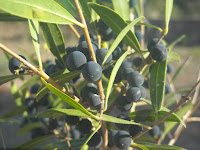
We’ve learned a lot about the proud Sardinians, about the sordid history of Isola di San Pietro, the slavery and the savagery and the Mafioso influences, about the quaint original Baraka structures, and the ancient Nuranghes scattered around the area (ancient stone structures build by Sardinian Fred Flintstones nearly 3000 years ago). We’ve developed local tastes for tuna pizza, cheap Sardinian white wine, and Mirto, a digestif made from tiny blackish-blue myrtle berries that grow freely in this area.
We’ve had the luxury and time to immerse ourselves in Mediterranean island life, to explore a unique town and a beautiful island, to relax and read and swim and cook.
We’ve begun to dream in Italian regularly…
And of course, like most real experiences in life, we’ve had our share of challenges.
Like the jellyfish stings and sunburns, visits to the dottore (doctor), the parking tickets, cheese codes, and the frustrations with our limited language skills.
Or there was that time when we accidentally burned that table and thought we’d paid a reasonable amount of money for the damage, but then were confronted in the piazza months later by the grandmother who convinced us that the damages were so severe that we needed to pay several HUNDRED more Euro.
Or that time we all got Swimmer’s Ear and thought it was just a bad ear infection, but then the pain got so intense that Jenna and I had to go to the hospital (which, by the way, cost only 36 Euro for two emergency visits).
Or that fateful day when Jeff jumped from the cliff into the ocean and lost his WEDDING ring. And how we snorkeled and searched for days and days and never found it.
Or that time we almost capsized the little boat we rented.
Or that time I was driving down that narrow street and clipped a parked van, managing to scrape the entire length of both vehicles. And the trouble we had filling out the accident report I found in the glove compartment, because the form was written in French (we have a French car, leased in France). And how I had to call France, and they had to find both an English and Italian interpreter.
Or that time Jeff was washing Terry’s sailboat and accidentally dropped an important piece of the boat into the water (the hatch cover) and it sank to the bottom, and how we couldn’t find it, and we had to rent a scuba diver to retrieve it.
But the challenges and “bad” times are all part of the package, an integral piece of the patchwork of experiences that make this time in Italy not an idyllic holiday resort vacation, but real life adventure. At least this is what Jeff keeps reminding me.

We are finally off to caretake a villa in Le Marche, a new region where we will undoubtedly stumble and blunder and manage to pull it off somehow.

NEXT UP: Le Marche

Saturday, September 25, 2010

Harvest


“How can they expect a harvest of thought who have not had the seed time of character”

-Henry David Thoreau

The heat of summer has mellowed into early fall. The morning sun no longer assaults as it rises, the dew sits on the patio a little longer each day and the breeze actually has a cooling effect. The days warm to a point of pleasure instead of pain and the ocean feels colder during our afternoon swims. The long summer evenings are gone--we still eat dinner al fresco, but we eat sooner, and we need sweaters and a bright candle to enjoy our food.
The crowds that stormed Carloforte in August have all gone home and once again it is quiet and peaceful. The cacti are “flowering” with buds of cactus fruit, and the migrating flamingos have taken on a distinctly pinkish hue. The season is changing and we will soon leave this lovely place.
The other day, our landlord Rafaella invited us over to join their annual harvest of uva (grapes). Needless to say, we were excited to have something to do for a change.
Rafaella and her husband Salvatore live at the northern edge of town, while “nonno” and “nonna” Rosso (the grandparents) live on the adjacent property. The Rossos have lived in Carloforte since the village was formed—they are original Carlofortini, descendents of the original 200 settlers given land to harvest.
Both families have several acres of land--Rafaella’s is primarily devoted to their 3 horses and a large vegetable garden. The quintessential Italian mother, she’s always sending us home with delicious bounty from her garden: zucchini, potatoes, tomatoes, watermelon, mint plants, and even capperi (capers) that she picks from her own plants, coats into a salt bath, and preserves in a vinegar/water mixture. I often confuse the word “capperi” (capers) with “capelli” (hair)—a mistake that Rafaella thinks is a riot.
The grandparent’s property is primarily devoted to grapevines, from which the family wine is made. Nonno makes a rough and rustic “blush” blend combing all uve on their property regardless of variety, size, color and quality.
By the time we arrived that day, the sun had burned away the cool morning clouds and the whole family was already hard at work. As usual, everyone turned out for the event. Salvatore has two sisters, both married with children, and we’ve come to know the whole gang—aunts, uncles, cousins. Over the summer, we’ve joined them for lazy afternoons at the beach, gelato in the piazza and late evening strolls on the lungomare. We’ve been invited to family dinners, and met for pizza at their favorite restaurant (La Conca, on the other side of the island.) In a sense, they’ve taken us under their warm Italian wing.
The instructions we were given for harvesting the grapes was simple: “tutte le uve”—all the grapes. Jenna and I were given clippers, while Jeff was ushered back to help out with the “crushing” of the grapes in a huge manual masher.
The vines were heavy with clusters of varying color and size that, to our untrained eyes, appeared to represent several different varieties – small, light green round grapes with a tinge of red, greenish-yellow grapes, larger dark green oval grapes and even deep blue ones. I popped a few into my mouth, and they tasted sour-sweet, warm and soft and seedy.
We expressed some concern with sorting protocol, but were reminded with a smile “tutte le uve”, all the grapes were to be cut and mixed together. With clippers in hand, we worked our way down the orderly rows, cutting the clusters and filling up the buckets. Bending, squatting, reaching, breathing in the smell of grapes and sun-baked earth, it felt so good to get hot and sweaty and tired from actually working.
Harvest is immediately satisfying work. Whether it’s a grape or a tomato, a pumpkin or peach, it’s that point in time a plant strives for, the whole point of its existence, that peak zenith moment when it so readily lets go of the thing it’s been nurturing, its creation. We cut and cut and cut, and as each bucket filled, we lugged it back to the “crushing” area. No selective process, no sorting, no de-stemming, we unceremoniously dumped the whole kit-and-caboodle into the masher and cranked away, slowly turning the mixture in the large fermenting vat.
An impressive assortment of insects buzzed around the top of the vat, drawn to the smell of the fruity broth.
It was no-nonsense wine making, taken down to the basic elements: cut grapes, squish grapes, save juice. Tomorrow, the mixture would be pressed to separate juice from skins and stems.
Without filtration, yeast or sulfates, the juice was bound for barrel sometime next week where it would remain until approximately next November when it would be “bottled” into reused (and pretty clean) gallon jugs. Certainly, the ancient art of winemaking can get much more complicated, but nonno Rosso’s technique was about as simple as it gets.
The kids helped by taking turns at the crank wheel, but soon became bored with the effort of work and darted inside the cool house to sit on the floor and dress up Barbies (girls) or hang Barbies by their necks (boys). Much teasing and taunting was had by both.
After a few hours, we’d picked all the grapes, and I imagined I could hear the vines breathe a collective sigh of relief, basking in a job well done, their mission complete, purpose fulfilled, time now to finally rest and relax.
Afterward, we all sat around the long dining table for a hearty midday meal, feasting on pesto lasagna, marinated vegetables, stuffed tiny peppers and wine (the product of last year’s harvest). After the meal was finished and the dishes were taken away, I was so tired my eyes could barely stay open.
I was grateful when, minutes later, Rafaella walked over to me and said, “Now, we sleep” and I nodded in agreement and said, “Si, anche noi” (yes, us too).
For the first time in months, we actually had a REASON for an afternoon siesta, and it was good.


NEXT UP: Arrivederci Carloforte

Saturday, September 18, 2010

Transitions


“The interval between the decay of the old and the formation and the establishment of the new, constitutes a period of transition which must always necessarily be one of uncertainty, confusion, error, and wild and fierce fanaticism”

-John C. Calhoun


Basically, our reason for coming to Italy was, “Why not?” The timing seemed right.
Our goals were a little vague—but intentionally so. We hoped to find a place to live, a lovely hilltown close to the sea, an affordable place that felt right to us. On previous trips to Italy, we’d flitted from town to town as “stranieri” (tourists). This time we wanted to put down some roots, stay long enough in one place in order to live more as locals and less as tourists-- to develop relationships and experience the rhythm of a local Italian life. We hoped to find work, but that prospect was a little more complicated, because in order to work legally in Italy we needed specific “documenti” (i.e., a visa) from the U.S., which we didn’t have. Mostly we were hoping, in this initial 6-month period (May to November), to figure out how to live here more permanently—maybe next year, maybe several years from now.
It took us about a month of hard searching to find “our place”, this island (Isola di San Pietro), this town of Carloforte. And when we found it, we knew it was special. A little slice of paradise.
Living here is indeed magical. A vital village teeming with locals of all ages, in a beautiful setting of azure waters, white sand beaches and hidden coves, baked in sunshine every day. What more could we want?
But as each lovely day flows into the next, and the next, and the next, time begins to slow. Days and weeks merge, and we find ourselves lulled into something like a walking sleep, groggy, lethargic, unable to remember what day it is, staring for long periods of time at nothing in particular. We are saturated in wonder--so what’s wrong?
When we first got to the island, there were always new places to explore, new experiences to occupy our time. But this is a small island, and we’ve had a lot of time. Jeff has ridden his bicycle up and down the island so many times he’s practically worn a groove in each of the three roads. Even working up the energy to go to the beach has become tedious. We’ve found so many hard-to-find “eyes of St. Lucia” we can fill a coffee cup.
I stopped having adventures to write about because we keep doing the same things over and over again.
It’s funny how quickly we get “used” to things, even really beautiful good things. Whether it’s a lovely ocean, a beautiful beach, a nice home, a good marriage, it’s hard to keep a fresh perspective. All those things in life that start out new and beautiful and exciting—they might still be there, but as the newness fades, the familiarity seeps in and we stop seeing the beauty. It takes so much work to keep seeing things new, to keep a fresh outlook. It’s hard to keep appreciating things.
Appreciation is easier when we compare something with its opposite. Eckhart Tolle says if everything in the world were blue, we wouldn’t even see blue anymore, because there wouldn’t be anything to compare it to. So we appreciate the sun when it’s balanced with rain. We appreciate the summer when it’s balanced with winter. We appreciate ease when it’s balanced with stress.
Rest and relaxation are good, but without anything to compare it to (like work) there comes a point when relaxation turns a corner and becomes flat and lifeless, and not even very restful. Some days, the most taxing thing I do all day is write up a grocery list. Or take a shower. On days when we have an actual thing to do, like someone invites us over to dinner, we’re almost giddy with excitement. It’s pathetic.
Feeling restless, we’ve branched out a bit, hopped the ferry and explored mainland Sardinia, taken day-trips to Cagliari, driven up to Alghero a few times. We’ve come to appreciate mainland Sardinia’s unique, remote, stark beauty.
But we needed something more.
What was this new and unfamiliar feeling?
Malaise?
Meloncholia?
Boredom?
By nature, Jeff and I are vibrant-minded people who never have a problem with occupying our time. We’re hard workers but we know how to relax and enjoy life. We share an appreciation for the Zen of “what is”, but also a quest for adventure.
We have found ourselves in a situation we hadn’t anticipated: neither tourist nor resident, we’re in this “in between” place. If we were tourists, on vacation, we’d just relax and explore, move on if things got boring. If we were residents, our lives would inevitably be structured around work, around accomplishing something.
Here we were, in ITALY, a country of endless beauty, feeling relaxed, yet restless and caged. Trapped. Bound by our remote location, but also by our limited budget, a budget so tight we haven’t set foot in a Carloforte restaurant other than to order a pizza
We began to fantasize about adventure, hopping a ferry to Sicily, hitting the open road. But not only did we have an agreement with our landlords for 2-1/2 more months of ridiculously low rent, but also we knew from experience that road travel is expensive and exhausting. Living out of a suitcase, eating in restaurants every meal, staying in hotels—we couldn’t afford it. Our situation here was good and sustainable, inexpensive and safe. Hitting the road was so enticing, though--maybe we’d find more towns like Carloforte. But maybe not. It was a serious gamble.
The road was calling to us. We longed for adventure, for newness, for something to happen.
We gnashed over our situation.
And then as luck (or destiny) would have it…something happened.
Ever since our travels began, we’ve been on a few email lists, alerting us to potential caretaker/housesitter positions. Usually, they’re either in locations we’re not interested in (like South Dakota) or jobs we’re not interested in (like cleaning) or qualified for (like horse experts), but one day I found a house-sitting opportunity in Le Marche region east of Rome. Assignment: take care of 2 dogs while the owners go on vacation to Croatia. Dogs! Le Marche! We jumped on it immediately, sent them our resume/profile, references, and spent the entire day, alternately checking email and crossing our fingers, chanting, “Please pick us, please pick us”. By the end of the day, we’d connected with the owners, they loved our profile, it seemed like the perfect fit, and the deal was done.
We were wild with excitement, dizzy with the prospect of a new adventure. A whole new region to explore! Something to write about! It’s the perfect opportunity to relocate and still save money. We leave in just a few short weeks.
The next day we talked to our landlords and gently explained the situation, and they were wonderfully understanding, mostly just sad we were leaving. (Rafaella even cried).
It feels strange to be this excited about leaving a place we were so excited to find, but life is strange sometimes.

NEXT UP: Harvest

Sunday, September 5, 2010

Bambini (Children)

“The most effective kind of education is that a child should play amongst lovely things”

-Plato


Jenna walks through the piazza and people smile at her. She’s our “Italian ambassador” for good reason: she paves the way simply by being a child.
Children are revered in Italy. Often, I see an adult caress little Maria or little Mario’s face in both hands, and gaze at them with something like rapture, as if they’re looking at the Savior, the Christ child, the Miracle. Of course that doesn’t stop the adults from screaming at the kids a few minutes later…”Mario, BASTA!”(stop).
I have a photograph of Jenna in Italy when she is 18 months old. She’s racing across the piazza in Bologna, bursting with toddler exuberance, elbows bent, stout little arms and legs pumping, and the people in the background are all watching her, smiling.
On these warm, late summer nights in Carloforte dark-skinned children run joyously wild in the piazza, yelling, playing, some on bicycles or scooters, most without helmets or parents nearby.
I’ve noticed that whether it’s the lack of helmets, lifejackets, seatbelts, guardrails or parents, there’s a pretty relaxed attitude about safety around here. Somehow, despite all this recklessness, the children not only survive, they thrive. There’s a sense that everyone is watching out for them, and all villagers (parents or not) seem to embrace this role.
The other day in the piazza a small child was playing and then fell hard and hit his head. The “head-hitting-pavement” sound is one that most parents are familiar with, and within seconds several adults rushed to the child. The boy was crying and wailing and one man picked him up while the others encircled him, murmuring calm, comforting words and gently rubbing the boy’s back. The mother finally showed up a few seconds later, and the other adults (all of them strangers) casually went back to what they were doing. It was sweet and caring and so “communal”.
Jenna, our Ambassador, seems more integrated into this community than Jeff or I—primarily because she spends full days in the company of Italian families. Jenna’s ability to forge friendships (first with our landlord’s girl Sara, then with our boat neighbors Arianna and Flavia from Rome, and most recently with the new girls across the street, Carola and Angelica from Milan) has resulted in her essentially “brokering” relationships with the adults as well. Thanks to Jenna, we’ve not only been invited to several dinners and sailboat rides, but we’ve also made some wonderful new friends.
Jenna loves going to Sara’s house. It’s a child’s paradise--horses and rabbits, chickens and kittens. There are jump ropes and Barbies and movies and even a big brother who loves to irritate little girls. Every day is a new adventure. The other day they found a live scorpion in a box of cards. Often, Jenna is invited to lunch, dinner or an occasional sleepover. Sometimes the cousins visit--little Eletra, who has a shy smile and likes to sit on Jenna’s lap, and Zeno a pudgy boy who likes to taunt the others but ends up spending a lot of time by himself, in Italian “time-out”, pouting and crying.
The fact that the household speaks virtually no English doesn’t bother Jenna. In fact, she loves coming home with fun new Italian slang words. Our current favorite is the word “DAI” (DYE-EEE) which translates (loosely) to “Oh COME on!”—so Jenna says to me,”MaMA, daiiiiiii” when she’s begging for gelato. Or Jeff says, “Jenna, daiiiiiii” when she’s not doing her chores. The word is best spoken in very dramatic fashion, with a long “ee” sound.
Jenna says it’s really not that hard to communicate in Italian. “You only have to say a few short words to get them to understand what you mean.” she says, “Even though I only know short Italian words, I combine them to say bigger things. Plus, I use a lot of hand motions”. She says that the hardest part is understanding what people are saying. “They could be saying something as simple as, ‘Hey, could you come over to my house?’ but you don’t know, and it takes about an hour to figure out what they mean’”.
Jenna is experiencing what Jeff and I have come to realize: when you don’t know the language very well, a person has to really WANT to make the effort to overcome the language barrier in order to communicate. It’s a unique filtering system, because it weeds out all those people who really aren’t interested.
Sara and Jenna often go to church on Sundays. Not being church-goers ourselves, I think Jenna is intrigued by the ritual and ceremony of the Italian Catholic Church, but also enjoys the social factor. All the kids sit in the front pews, and from Jenna’s reports, they do lots of singing and some “prayering”. Jenna loves collecting the beautiful “offering cards” she gets at church, with the lovely picture of the Madonna. A few weeks ago, she saw her first baptism. She described how the baby girl was dressed in a long white christening gown, and was gently handed over to the priest by her parents. The priest then dipped an ornate spoon into the water and dribbled it over her tiny head. Jenna said the little girl looked pretty grumpy about the whole affair, but when the priest then held her up and the little girl saw the whole congregation smiling at her, her face broke into a big smile.
After church, all the children run down to the local gelatoria, where they each get one scoop of free gelato, an ingenious incentive for church attendance.
Living in Italy with Jenna has been lovely and challenging.
Of course, we try to make this experience enjoyable, but just as we’re always trying to make LIFE enjoyable for our daughter, it doesn’t always turn out that way. And the funny thing is, while as parents we never actually want our children to suffer, it is precisely in those moments that they learn important things—like how to be flexible, patient, independent, brave, have a sense of humor, laugh at your mistakes. Adversity is a good teacher.
Jenna has been forced to sit through endless hours of air, ferry, bus and auto travel, waiting in lines and the inevitable delays. She’s been stuffed into back seats crammed with luggage, and ridden cramped smelly buses that whip around winding hairpin turns next to sheer cliffs. She’s survived dangerous bouncy boat rides, sunburns and painful swimmer’s ear. She’s slept on couches and floors and in tiny attic spaces. She’s had to handle cold showers and filthy toilets and terrible food. She’s had to battle bees and mosquitos, jellyfish and scorpions. She’s lugged her suitcase across bumpy streets, and up multiple flights of stairs. She’s been so hot and tired she can barely stand up. She’s had to listen to her parents judge each others driving skills, and bicker over maps, directions, who’s right and who’s working harder.
But despite all these challenges and frustrations, Jenna keeps waking up fresh every morning, asking us what we’re going to do today.
We see her looks of wonder and excitement as she experiences this very different culture. We watch her emerging independence, as she walks to the village by herself, meets new friends. We feel proud to hear her speak confidently in Italian, ordering gelato and candy and cheese. We remark on her bravery, as she hikes down a steep rocky mountainside, or rides her boogie board in crashing waves, or jumps off a cliff into the water.
She somehow talks us into carnival rides that turn out to be thrilling, and desserts that turn out to be delicious and movies that we end up actually enjoying.
The thing about being in Italy with a child is that children have that wonderful ability to pull you into their kid world, and make you see things differently (if you’re willing). Time is different in the Italian kid world—“Abbiamo tempo”: we have plenty of time to play, plenty of time to stop and notice all the tiniest details, the brightly colored insect, or the lizard scurrying across the hot stones, the colors of the buildings, or the intricate pattern in the cobblestones. We have time to sit and watch the daily life of a village, to learn a new language together, to frolic on the beach or read or just float in an ocean that is actually warm. We have time to learn new card games and make picnics and look at the stars.
We have time.

NEXT UP: All this TIME has got to lead up to something…transitions

Wednesday, August 18, 2010

Mercatino


“The trouble with eating Italian food is that five or six days later you’re hungry again.”

-George Miller


On Wednesday mornings, I walk past the cafes on the lungomare, past the intoxicating smells of strong espresso and sweet pastries, to the “mercatino”, a weekly outdoor market held in a seafront parking lot at the southern edge of town. Striped vendor tents are lined up in two long rows with a walkway down the middle. The merchants spread out their wares and park their trucks and vans behind them, ready to make a quick exit in the early afternoon.
By mid-morning the market is already crowded, with locals and tourists (all Italians). The tourists are generally better dressed, and tend to mill and wander, sometimes pointing or taking photographs. The locals are more businesslike, rolling their smart canvas shopping carts behind them.
I walk slowly along the hot, sunny walkway, because every few steps I’ll need to brake quickly, when Carloforte neighbors suddenly stop to greet one another. “Ciao, bella!” they shout with exuberance, like they haven’t seen each other for ages, like they didn’t just see each other at the festa the other night. Then there’s the inevitable kiss (sometimes left/right/left and sometimes right/left/right), the full body hug, big smile, then a laugh, followed by simultaneous talking and gesticulating.
I smile longingly and scoot around them, feeling a slight pang of jealousy at these friendly chance-meetings, and a little ache thinking about all my friends back in Portland, and the simple pleasure of seeing a familiar face at the local market, or dog park, or coffee shop..
In fact, we’re so accustomed to seeing friends everywhere we go, that we still inadvertently look for them here. So far we’ve seen the Italian twin of Corey, Dickey, Debbie, Diana, and several Johns…just to name a few.
I think about how many times I have actually seen someone I know at this weekly market and the answer is once – last week, when I saw the man who lives on the boat next to ours. We both smiled and greeted each other with a nod, smile and a “giorno” (the “buon” in “buongiorno” is often silent here).
I scan the first few tents, where vendors sell household goods, kitchen items, linens, clothing, bathing suits, towels, shoes, toys, plants. Usually, I need something in this section, whether it’s a dish towel or wooden spoon, a snorkel or parsley plant.
I generally avoid the clothing tents, where the merchants show off their “best” on hangers swinging from the roof supports--racks of house dresses, fancy men’s slacks, wispy see-through beach cover-ups, sequin-studded micro bikinis—they’re mostly overpriced unless I get lucky at the 5 Euro table. The smell Italian leather is strong as I pass tables of glossy purses and high-heeled pumps or my favorite Italian shoe: the OPEN-toed “boot”—is it a boot, or is it a shoe? Sometimes it’s flat, like a flip flop, sometimes high-heeled, like an open pump, but with a leather wrap around the ankle or lower leg—a sensible choice on those days when your toes are hot but your calves are cold.
At about the halfway mark, the tents change to food and the air fills with the pungent fragrance of cheese and the earthy smell of vegetables.
I’ve learned to go to the market with a very short grocery list, because the food options change constantly, according to what’s fresh and seasonal. Whether cherries or peaches, clams or tuna, I’ve learned to adapt my cooking, so that I buy what looks good and then spontaneously formulate a meal plan around it.
Interestingly our longing for Thai, Asian and Mexican dishes are starting to give way to the available, seasonal foods of Italy (certainly not limited to pasta)--as if our bodies are adapting to the natural environment. We still make ethnic dishes, but they’re modified with Italian ingredients.
It’s making me see things very differently, with regard to “eating locally”.
It seems so logical and right, yet I admit, I am accustomed to living in Portland, Oregon, where one can satisfy nearly any food whim at the local grocery store. Brought in from hundreds, sometimes thousands of miles away, I can find asparagus, artichokes and berries out of season, and fish that wouldn’t be caught dead in Pacific Northwest waters
It reassuring that, with few exceptions, the food in Carloforte is local – if not from Sardenia, then at least close by. The exceptions include pineapple, bananas and avocado which come from Africa (closer to Carloforte than mainland Italy).
I notice that vendors at the marketino often sell the same items, but I’ve learned to return to my favorites not only because they remember me, but because I like to think I’m getting better service being a “regular” customer. I stop at my favorite cheese tent, and in practiced Italian I ask for a slab of fresh soft pecorino, which tastes smooth and slightly sweet, nothing like the hard, aged, salty kind. Next I order a large wedge of Parmesano Reggiano, heavenly with a caramelized, buttery taste. Never have we tasted Parmesan this good. I usually buy salami here and sometimes olive oil that’s sold in used 1-1/2 liter plastic water bottles, still with their labels. The oil is a luminous, goldish-green color, with a velvety smooth taste and a peppery finish. The first time I bought it, I asked the cheese man, “Dove questo fare?” (where this make) and he pointed to himself, and said, “Da me, a Carbonia” (by me, in Carbonia) a town about 15 miles away, on Sardinia. It makes me ridiculously happy to know the man who is making my olive oil.
One vendor sells nuts, another sells olives swimming in tubs of brine. Many vendors sell fresh local eggs, with bright orange yolks and thin spotted shells, sometimes with feathers still clinging to them. No one refrigerates eggs in Italy.
I stop at one of the fruit and vegetable tents and grab several blue “boostas” (plastic bags) for my purchases, being careful not to mix my produce. They frown when you mix your fennel with your onions.
I grab a small bundle of the sweet, tiny carrots that Jenna loves, with their green plumy tops and thin, tapered ends, clumps of dirt still hanging on them like they were just dug up this morning. I get a cantaloupe that is so sweet I eat the whole thing for breakfast one day, wrapping the wedges with salty prosciutto and slipping them into my mouth, one by one. I buy fresh cherries and perfectly ripe peaches that Jenna and I slice and make into a “crisp” topped with crushed hard cookies mixed with melted butter. Once we even made a grilled peach appetizer. We brushed the peach slabs with olive oil and a sprinkling of salt and pepper, then slipped them onto a piping hot grill for a minute, and draped them with paper-thin slices of fresh pecorino and prosciutto.
I stand, shoulder to shoulder with the other customers, ready to hand my bags to the merchant. The window of personal space is smaller here—people stand closer together, often brushing up and bumping against each other, so close I can often guess who has left the house without brushing their teeth, or showering.
When it’s finally my turn, I hand my bags to the vendor, and sometimes ask for something else, like arugula or parsley, something that I think they might have (but that I don’t see), and they often reach into a hidden bag or their van to get it for me. How many other things are hidden behind the tables? They weigh my items and charge me what always seems like too little—usually just a few euro for loads of produce. I’m always prepared with plenty of coins, because vendors love getting exact change (they frown and look exasperated if they have to make change). Most of the time they give me a “Grazie, senora” afterward, but occasionally they call me “Madame” thinking I’m French. I’m not sure why.
At the far end of the market is the riotous fish counter, always my last stop so I can rush back home. The fish men (there are three) stand on a raised platform, with a long counter in front of them and the fish splayed out on the crushed ice below them. There’s always a huge fish up on the counter—tonno (tuna) in the earlier season, now pesce spada (swordfish)--with either an alarmingly large head or fin showing. The fish men hack away huge slabs of the meaty flesh, and then wrap it up delicately in paper.
I look to see what’s offered this week, stand on tiptoe, but it’s tricky because there are about twenty customers standing in front of the fish, yelling, pointing, anxious to place their orders. As usual, most of the fish is utterly unrecognizable to me, however I do see vongole (clams), gamberi (shrimp) and calamari.
One week, they were selling tiny live crabs. The crabs were stuffed into a large bag with airholes, but the crabs kept jabbing their tiny pinchers at the holes, making them bigger, and crawling out. One of the fish men was standing next to the bag, grabbing the errant mini-crabs and placing them into a high-sided crate nearby. But the number of escaping crabs far outweighed the quickness of one fish man. Jenna noticed tiny crabs crawling on the table, tiny crabs jumping off the table, tiny crabs making a break for it along the pavement, and tiny crabs slipping into the storm drain, so she jumped in to help, gently lifting up their little bodies with thumb and first finger and placing them into the crate.
The fish men are always yelling—at the customers, at each other. “Cozze, cozze!” yells one of them, and another man races to their van and comes back with more fresh mussels to throw onto the ice.
The customers are literally shoving each other to see what’s offered, yelling their orders to the fish men. But everyone is good-natured, happy.
I always get this nervous, excited feeling at the fish market. Heart pounding, chewing my lower lip, I practice my words—vongole, gamberi, calamari. Vongole, gamberi, calamari…
The calamari will require the most work. First I’ll have to cut off the head with the buggy eyes, cut off flaps and squirting ink sacks, reserve tentacles, remove long stringy things and reach inside to pull out the slimy guts and remove the thin flat bone. It’s a gruesome job to get it to look like the thin white fish I’m used to, but it’s worth it.
Finally, it’s my turn to order.
“DIGA!” (tell me) the fish man shouts, pointing at me.
“Vongole?” I say.
“EH?!” The fish man shouts at me, because my voice is ALWAYS too soft. I end up having to shout my order.
“VONGOLE!” I shout.
“GRANDE o PICCOLO!?” (large or small) the fish man yells. The clams are sold in various size bundles, held together by a black net.
“PICCOLO!” I shout. Then I order the shrimp.
“QUALE!?” (which kind) the fish man demands. I hate this part. There are about six different things that LOOK like shrimp, but may in fact be something else. I point and keep my fingers crossed. Then I order the calamari.
“QUANTI!?” (how many) the fish man yells.
I stand on tiptoe to see how big they are. This week they’re huge.
“DUE!” (two) I shout.
“ALTRO?!” (something else) the fish man yells.
“No, va bene” (no it’s good) I say with a shy smile.
Whew. It’s over. I pay for the fish which is, surprisingly, always MORE than I expected. The fish man hands me my bags, but as I reach for them I feel my stomach brush up against the slimy wet fish at the edge of the crushed ice. I’ll need to wash this shirt.

# #

The recipes…
- Grilled calamari tossed with olive oil, lemon juice, garlic, salt and pepper, served on a bed of fresh, nutty arugula.
- Creamy risotto, with fresh clams and shrimp, using a fish stock made from the shrimp peels.
- Spaghetti alla vongole with fresh clams, lemon, parsley, red pepper flakes.
- Seafood pasta salad, with fresh corkscrew pasta, basil puree, red pepper, red onion, olives, baby peas, shrimp and calamari

NEXT UP: Who knows…?

Thursday, August 12, 2010

Sul Lungomare (on the waterfront): Festa del Pesce (Fish Festival)


“Fish recognize a bad leader”

- Conan O’Brien


We were happy in our quiet little house on the hill, with the terrace, kittens, distant sea view, and the privacy and freedom to wear minimal clothing and/or yell at each other if necessary.
It’s different down here in the marina. We have close neighbors. We are in the midst of things. The lungomare, the centro—this is where it all happens.
Carloforte is bustling in August, as the population swells from 6,000 to 20,000. The ferries are busy shuttling tourists in and out of the harbor. Some of the stores are shortening their siesta hours, or even staying open. Umbrellas at the beach are getting closer and closer together. Tables of people are spilling out onto the streets, speaking French, Italian and sometimes (rarely) English.
And every weekend there’s a different festival—“Festa del Tonno” (tuna festival), “Festa della Musica” (music festival), “Festa della Nonna’ (festival of the grandma), “Festa del Turista” (tourist festival)--festa festa festa. Everything from parades to carnivals, fireworks to fashion shows, singing contests to teenage dance ensembles—the Carlofortini like to dress up, get henna tattoos and party.
There’s always live music at the festa, and unfortunately it’s always seriously lacking in musical talent--but that doesn’t stop anyone from dancing. After a few glasses of wine, I’m out there doing the local “line dance” with dozens of other women. Sure, I’m stumbling through the moves, sometimes bumping into people, but I’m learning. My favorite tunes, though, are the waltzes, when all the Carlofortini elders show off the smooth, gliding steps they’ve been practicing for decades.
Last week we went to the “Festa del Pesce” (fish festival).
We arrived around 9 pm, and took our place in the long line of people extending from the “fish tent”. My mouth was watering in anticipation of a freshly caught, freshly fried fish dinner. After ten minutes in line, though, we hadn’t moved an inch, so of course I went to investigate.
At one end of the tent were two types of fish soaking in buckets of water: gamberi (shrimp) and the little unidentifiable fish we catch from the dock—the fish that our Italian neighbor girls call “bob” (it’s funny to listen to Italians say ‘bob’—with a hard “b” at the end). The shrimp and “bob” were drained, coated with a cornmeal/flour mixture, and then passed to the cooks, who poured the fish into sizzling oil-filled metal cookpots. The pots looked like huge woks set over an open flame. The cooked, golden fish were then lifted, drained and dumped into large metal pans and set on a table. The pans were brought, one at a time, to the prep table, where (theoretically) the plates were prepared for the customers. Each plate held a handful of both types of fish, along with a hunk of watermelon, a roll, and a sweet hard cake.
It seemed like all the elements were in place--there were plenty of staffed workers, tons of fish--so what was taking so long?
Since I didn’t understand most of the language, I decided to use my powers of observation and imagination to make up various scenarios.
A man stood in line, holding a 10 Euro bill, talking loudly to the cashier. (Was he angry?) The cashier had her cash drawer open, and was alternately looking at him with a bored expression, and looking at a woman at the prep table. (Was she waiting for a plate of food? Was her cash drawer out of change?) The woman at the prep table held a half-filled plate and was talking loudly, almost yelling at the man next to her. The man shrugged, threw up his hands, and yelled back at her at the same time. (This simultaneous yelling happens all the time here—it’s ever-present, like background music). A different woman at the prep table absently placed a piece of watermelon on a plate and then wandered off to talk to the fish cooks. Finally, the woman at the prep table picked up a handful of fish, put it squarely on the plate and walked over to the cash register. The plate was given to the customer. The cashier took his bill and gave the man 5 Euro change. Then they both yelled at each other for ten more seconds, and then they laughed (laughed!) and the man walked away with his plate of food.
This exchange took at least 2 minutes. For one plate of food. I continued to watch for a few more minutes, to see if this was an aberration, but discovered that on average, each plate of food took at least one minute to prepare (I counted to myself). I quickly calculated that it would be 100 minutes until we got our fish. Goodbye blood sugar.
From my observation, it seemed as though there was no specific “plan” in place with regard to actually getting the plates of food to the customers. It was as if this so-called “fish festival” caught the staff by surprise. Most of the time, the staff were either talking, yelling, laughing, walking around, drinking wine, or waving their hands.
No one was taking this seriously! Didn’t they know there were hundreds people in line? Didn’t they care about the hungry masses? Who was in charge, here? I desperately fought the urge to jump in and offer my assistance, since I could see it all so perfectly, and they so clearly needed my help. I had several good suggestions for improvement, several smart, insightful ideas as to how they could run this festival in a much more organized and efficient fashion, starting with an assembly line.
If only I were in charge…
I walked back to find Jeff and Jenna in line, a few inches closer than when I’d left. I relayed my observations, and we laughed at my obvious neurosis.
As has happened so many times in Italy, we were torn between the EXPERIENCE (eating fish at an Italian fish festival) and the need to maintain adequate blood sugar levels. Should we just grab a pizza and call it good? When I suggested the pizza idea, Jenna objected and said she wanted to wait for the fish, so we decided if she could wait, we could wait.
So we waited (and waited) and we watched. And then we noticed it: the subtle art of celebration Italian-style--a festa within a festa – the “line festa”. Multiple generations were simply celebrating being together to queue up for a good cause. The food seemed quite secondary to the primary act of celebration. It was all there--intimate conversations between couples young and old, groups of bantering teenagers, random outbursts of simultaneous yelling, laughing, kissing, waving of hands.
Wait a minute…
No one appeared to be the least bit upset that we were essentially at a standstill in line (except me). No one was dumbstruck at the lack of organization (except me).
Again, I am given a lesson in patience.
Why am I in such a hurry to achieve my goals? (Well, we were hungry.)
Time works differently here. Sure time moves on (in linear fashion), but it is frequently diverted into timeless loops of human experience. The evidence is everywhere—at the festa, at the market, at the post office, on the street. I’ve seen two cars going in opposite directions stop, in the middle of the road, to have a conversation, cars backed up in both directions, and everyone waits, nobody honks.
When am I going to get this?
When am I going to stop this inner honking?

NEXT UP: Mercatino (the weekly market)

Thursday, August 5, 2010

Life Aboard


“It’s not the towering sail, but the unseen wind that moves the ship”

-Proverb


Living aboard a “barca a vela” (sailboat) is like camping in a place in where the earth is constantly moving and there’s barely enough floor space for the tent.
I’m the first to admit that I’m not a natural sailor like Jeff and Jenna, so spending the month of August on a boat will be a challenge for me, no doubt about it.
I love to be IN the water, but living ON the water taps my senses in surprising ways – motion, sound and light disorient and delight me all at once.
Just simply boarding the boat requires walking (teetering) across a narrow wood plank, slightly wider than a balance beam. It’s tricky if you’re carrying, say, a bag of heavy groceries, but I get wobbly just carrying my purse across. All the boats in the marina are moored “stern to”, meaning the back of the boat is tied to the dock (about 5’ away), with a line extending from the bow, anchored into the water to hold it in place. This way of mooring boats allows the marina to fit more boats with less dock.
The boat we’re living on is 36 feet long and about 12’ wide, in typical nautical colors of white and navy with a nicely finished teak trim (thanks to Jeff). Along with their boat “names”, each boat is identified by a flag flown from the stern (back). Ours is the Irish flag, since the boat is owned by our Irish friend Terry, with vertical stripes of green, white and orange. Our neighbors aren’t sure what to make of us, because we’re clearly not Irish.
Once onboard, after a shimmy around the large steering wheel in the cockpit, there’s a small al fresco seating area and fold-up table. I’ve brought my small planters of herbs (parsley, basil, mint and cilantro) which are getting windblown and scorched, but they help give this space a nice homey touch. Jeff has rigged up a sunshade overhead, made from a white king-size duvet cover, held in place with an inventive combination of knots, bungee cords, broom, mop, 2 big sponges, and I think a few of my hair ties. This is the epitome of “jury-rigging”, but shade is essential in this sun-baked location.
“Down below” four stair steps and into the cabin there’s a tiny L-shaped “galley” (kitchen) with sink, 2-burner gas stove and refrigerator. Forward from the kitchen is a dining table with u-shaped padded bench seat, and across from that is a desk with navigational equipment. Long narrow windows and several hatches (operable skylights) provide natural light and air. There are two tiny bedrooms called “berths”. Jeff and I are in the “V berth” at the bow, with two small closets, floor space for one, and a “V” shaped bed that’s wide at the head and shoulders and narrow at our feet like a mummy bag (adding to the “camping” feel). Getting out of bed requires either an elegant backward summersault or an ungraceful pinwheel “break dance” move, with my bare feet grazing Jeff’s cheek.
Jenna sleeps in the “quarter berth” at the other end of the boat. When I say “other end” I mean about 7 steps away. She has similar floorspace and closet, with a rectangular bed and limited head room (if she rolls over and sits up in bed she’ll bang her head on the ceiling).
There’s also a miniature head (bathroom), with an inoperable shower, tiny sink and a toilet that requires a complicated flush/pump/water/rinse procedure that continuously baffles me.
There are “cubbies” and shelves everywhere for storage, but trying to fit all our things in these tight quarters is challenging. I try to channel my mother-in-law Lucy, who manages to expertly pack and organize literally hundreds of items on their similarly-sized sailboat in preparation for their annual voyages up to Vancouver Island in Canada. From Dijon mustard to smoked oysters, she knows exactly where each item is stored. She’ll say, “Tracie, could you reach behind that seat cushion in back of you and grab the powdered sugar—it’s underneath the cornmeal”. A quick glance into their “V” berth and all her sweaters are rolled up tightly and lined up on the narrow shelves (they might even be organized by color). It’s an amazing talent that I, unfortunately, do not share. Our “V” berth shelves are spilling over with a jumbled combination of bags, sunglasses, hats, dresses, books, phones, Advil, bottles of water and wadded up pieces of paper.
I’m good at organizing, but I have an annoying habit of not putting things away where I found them. I know this about myself. I’ll misplace my passport or my wallet for the hundredth time and Jeff will roll his eyes and say, “How unusual”. I understand the importance of “a place for everything and everything in its place” especially on a boat where space is limited, but putting it into practice is a struggle.
It’s been 5 days aboard and I still feel dizzy. When I close my eyes I am rocking all the time, feeling the room spin like I’m constantly drunk. The other day I walked over to the marina showers and while I was shampooing my hair, I briefly closed my eyes and ran into the wall. I almost tipped over completely.
Combine the dizziness with a continuously rocking boat, factor in the low ceilings and narrow walkways of the cabin, and this is a recipe for injury. I bang my head on the low ceilings, bruise my hip running into the desk, ram my thigh into the table. I also trip over all the raised “lips” on the door thresholds. I assume experienced sailors get used to all these hazards at some point, but I have not reached that point. Jeff and Jenna appear to be bruise-free.
The mornings are beautiful. I usually wake up because I feel the boat swaying from side to side. I listen to the water slapping gently against the bow, the quiet creaking of boats nearby, and a tiny jingle of boat lines. If I get up early enough, I can catch the morning sun reflecting off the water, making wavy white patterns on the other boats. The buildings along the waterfront are bathed in sweet buttery light.
I’ve started taking morning walks again, because it’s cooler down here, next to the water, than back at our barraka on the hill. Sometimes I walk along the seafront and out to the jetty that juts out far into the bay, to watch the ferries come and go. But sometimes I just walk a few blocks to the panificio and buy fresh ciabatta before it runs out by mid-morning. The thin, crispy crust and chewy insides are delicioso with butter and orange marmalade.
The social life in the Marina Sifreidi is unique. There’s a comraderie among sailors, as they all have this sailing thing in common. Everyone is tanned and leathery, and quite friendly. It’s fun to wander along the dock and check out how people live on their boats. Some people are always there, out in the cockpit, eating, talking, laughing, playing cards, drinking wine. And others keep more to themselves. The really big yachts are all grouped in one area along the seafront, so all the passersby can gaze at the luxurious splendor and wealth. These yachts (which are sometimes as big as ferries) have uniformed staff who get up early and bustle around the ship, cleaning, cooking, setting the table, looking busy.
The other day, we met a family from Roma, moored 3 boats over. They have two young girls, Flavia (8) and Ariana (11). Outgoing Ariana spied Jenna and immediately recognized a kindred spirit. She began talking in animated, rapid Italian. When she discovered we were American, she barely missed a beat and immediately launched into her practiced English skills. What she lacks in vocabulary she makes up in enthusiasm.
We’re discovering that, while most children in Italy are taught SOME English in school, those from larger cities seem to have better skills and seem more at ease with it. Within minutes, the three girls were playing—such is the universal language of children.
We met the parents briefly that first day, and then the next morning they surprised us with an impromptu invitation to sail around the island on their boat. Knowing the boat was big and stable, we didn’t let our last go-around stop us from an adventure.
The girls were giggly and excited, and the parents, Sonya and Walter, greeted us warmly and apologized for speaking “only a little English”.
Sonya and Walter are a vibrant pair. Sonya is a young, buxom outgoing woman with a big smile and a quick laugh. In perfect Romanesque style, she wore big black sunglasses and an elegant thin white chiffon tunic with rich paisley trim over her tiny bathing suit. Sonya is warm and friendly and simply oozes sensuality. Jeff is completely smitten with her, and I think I am, too. Her husband, Walter (pronounced “Valtera”) is a handsome 50ish man, with grey hair and a stout hearty presence. He is an “accountant”, which means “lawyer” in Italy.
We sailed halfway around the island on their lovely 44’ boat, and as the day went on, Sonya and Walter’s English skills got better and better. It was as if they were uncovering words that had been long dormant. By mid-afternoon, they were cracking each other up with broken English banter.
“Sonya” Walter calls from the dinghy, “Get me photograph machine, please”
“Camera!” yells Sonya, laughing.
“Wife, get me CAMERA please” Walter repeats.
“We speak very good English by tonight” Sonya winks at us.
Jeff and I spoke as much Italian as we could, and only resorted to English when we had to.
This is the way it goes with the Italian friends we have made. As with our landlords Rafaella and Salvatore, who have taken us under their wing, we’ve gotten into a companionable presence with each other, while they speak as much English as they can, peppered with Italian, and we speak as much Italian as we can (until our heads hurt), peppered with English. It works! (With the occasional help of an Italian-English dictionary.)
We anchor halfway around the island off a small beach and loll away the afternoon talking, swimming, eating a delicious lunch that Sonya prepares of little “pizzas”, soft delicious rounds of oily focaccia with hints of rosemary and coarse salt, split open and filled with cotto (ham), local tonno (tuna) and formaggio (cheese).
We take the dinghy to the beach and Sonya and I sit at the water’s edge, scanning the small rocks and shells, looking for the “occhi di Santa Lucia” (“eyes of Saint Lucia”).
These precious, 1-2 cm. finds look like tiny rocks or flat shells, but are actually an “operculum” (the small plate that closes the opening of a mollusk’s shell when the animal retracts) of a small sea-snail called Astraea Rugosa, found in the Mediterranean waters of Corsica and Sardinia. The flat side has an amazing, swirling, butterscotch colored spiral, and the other side is white and brown, and slightly rounded.
When I find my first one, it feels like I’ve discovered an ancient artifact. The spiral reminds me of an ancient symbol, something that seems to resonate deep inside of me. Often bound in gold to form a pendant, the Eye of Santa Lucia, also known as Shiva eye, is considered to ward off “the evil eye” and bring luck and happiness, as well as good fortune. I scan the area thoroughly, because we need these things.
Saint Lucia (282-304), a Christian martyr, is the patron saint of the blind, who bestows the gifts of light, enlightenment and eyesight, especially as the opener of newborn eyes.
The legend of “Saint Lucy” is conflicting. One story says she gouged out her own eyes in response to a persistent, but undesirable pagan suitor. Apparently, she then sent her eyes to him on a platter and asked to be left in peace. Another version has her tortured by eye-gauging because she turned down that persistent suitor. And yet another story says that in order to stay true to her faith, she plucked out her eyes and threw them into the sea, then later the Virgin Mary gave her even more beautiful eyes in response to her devotion.
Saint Lucia is often depicted in paintings with her eyes gouged out and holding them on a plate, but Sonya tells me that the statues often show her holding her eyes in her hands.
The feast day for Saint Lucia is December 13, which, coincidentally is JENNA’S BIRTHDAY. In Italy, Saint Lucia Day is celebrated primarily by Christians, but oddly enough, it is also celebrated by Lutherans in Scandinavia. It is said that, in Sweden, to vividly celebrate St. Lucy's Day will help him/her live the long winter days with enough light.
After an hour, Sonya finds three and I find two.
We stay longer than we’d expected and end up motoring back to Carloforte in the crisp weather of twilight. Sunbaked and tired, we get off the boat, say Ciao and Grazie to our new friends, and walk back to our own little sailboat, 3 boats over.

NEXT UP: Sul Lungomare (On the Waterfront)