Sunday, October 31, 2010
Amsterdam
“Enlightenment doesn’t occur from sitting around visualizing images of light, but from integrating the darker aspects of the Self into the conscious personality.”
- Carl Jung
Amsterdam-
Part 1: Getting There
When you look at a map of Europe, all the countries seem conveniently close together—like you could easily drive from country to country--but that’s actually not true.
Countries are really far apart here, and The Netherlands is a long way from Italy.
We left Florence at the crack of dawn, calmly discussed our navigational plans, and drove northwest, crossing into France, and stopping only at Autogrills for fuel (food, gas) or visits to “les toilettes” . The plan was to get as far as we could in one day.
Jeff generally prefers to drive, and since he’s comfortable with the standard European highway scene--everyone cheerfully tailgating at 140k/hr., inches from guardrails on either side—I’m happy with it. He pops coffee-flavored Alpenlubes, and listens to the Grateful Dead on a caffeine buzz, while I busy myself in the passenger seat, feet on the dashboard, sandwiched amongst the water bottles, snacks, empty cups, shoes and wadded up pieces of paper, alternately looking at maps, guide books, magazines and the scenery.
Jenna is wedged into the backseat with luggage, pillows, sweaters, candy wrappers and a sea of Barbies.
As we drove north from Marseille, the bucolic French countryside that I’d been expecting turned out to be just miles and miles of wide flat farmland, a few white cows and sheep, and occasionally, the glimpse of a village bell tower far off in the distance. Apparently, in this area at least, the French prefer to keep their bucolic villages well away from the peage (the French freeway). Eventually we noticed road signs indicating that we were in the Rhone Valley. We followed the meandering Rhone River for a spell, but the landscape barely changed.
After 12 grueling hours, we had driven as far north as Dijon in central France, but couldn’t find a hotel room available in the town center, which surprised us. This was a city of good mustard, sure, but not exactly a tourist destination.
Little did we know, this limited-vacancy-in-France situation would portend more travel challenges in our future...but that’s another blog.
We ended up at a cheap hotel on the outskirts of town, which was fine because we all fell face-first into bed, exhausted. The next morning, determined to reach Amsterdam by early afternoon, we choked down a quick breakfast, and hit the road again, ready to do it all over.
After another 9 hours on the road, we started passing towns with names like Monchengladbah and Hertogenbosch, so we knew were were close. Just a few miles from Amsterdam, we were running on empty, so we pulled into the Total (gas station) for a fill-up. While Jeff pumped the gas, I went inside to buy a bottle of Coke (travel craving) and pay for the gas. I walked up to the counter.
“Welke pomp betaal je voor?” the cashier asked.
Oh no…Dutch. Our last stop was a gas station in France, where at least I knew a few words. With all the driving it hadn’t registered that we were now in a country where they spoke a different language—apparently a completely indecipherable language
I pointed to the gas pump outside and gave her a really big smile.
“Welke POMP betaal je voor?” she asked again slower, clearly enunciating the word that was most important in the sentence.
I chewed on my bottom lip, thinking. POMP—oh! I held up 4 fingers for gas pump #4.
“Die zullen worden vijfenveertig euros dan” the cashier said. “Voor zowel”
(The facial contortions and the throat-clearing sounds of the Dutch language just astound me. )
I tentatively handed her a 50 euro bill and she gave me back some change. Whew.
“Heel erg bedankt” the cashier with a thank-you voice.
In response, I make an audible sound like “thanks” but without opening my mouth, a muffled sort of hum with a “thanks” voice.
I left quickly, walking past a sign that said simply “Knoopunt” and I realized: I’m completely unprepared for this country.
Amsterdam-
Part 2: Rated PG
We arrived in Amsterdam late in the day, meeting up with Jeff’s parents, Jack and Lucy, at the hotel. They had just finished a 2-week river cruise, travelling from Budapest to Amsterdam, and had lots of adventures to share. It was nice to have a family visit after such a long time, and Jenna was ridiculously excited to see her grandparents.
The fact that I fell in love with Amsterdam within one day was a surprise. It’s not that I thought I wouldn’t like Amsterdam, it’s just that I never really gave Amsterdam much thought before this visit.
First of all, it’s visually stunning, with tidy brick buildings, steep roofs and serene canals. The four main canals radiate outward from the center of town, in rainbow-shaped semi-circles, with hundreds of bridges, cafes, quaint shops and alleyways meandering around them. As Lucy pointed out, Amsterdam doesn’t just have one waterfront (like some cities), it has waterfront all over the city.
The roads are flat, which makes it perfect for all the bicycles. Bicycles appear to outnumber the cars roughly 10:1. They’re everywhere, flooding the streets and bike lanes, flowing seamlessly with cars and pedestrians. Everyone, old or young rides a bike and no one wears a helmet. It’s a steady current of people on bicycles going about their daily business—talking on cell phones, listening to IPODs, hauling bags of groceries, cradling infants. Jenna even saw a man riding along, holding the bottom half of a mannequin under his arm, and the top half was peeking out of his bike bag, with the head and arms sticking out.
It’s much easier to get around the city by bike, so we rented them the whole time. Ours were the standard, single speed “cruisers” with wide seats and handlebars, without gears or hand brakes. I hadn’t ridden a bike like that since 5th grade, so I was a little awkward, especially braking at the stoplights. I just couldn’t remember to brake with my pedals, I kept clutching the handlebars expecting hand brakes, and I subsequently careened into Jeff and Jenna with regularity.
We rode bikes everywhere, and met up with Jack and Lucy (who walked or took the metro tram) at various points in town: we rode to the Van Gough Museum, where we saw an original Sunflowers painting; we rode them to the Rijksmuseum, where we saw Rembrandt paintings of stodgy old Dutch Masters, with their floppy black hats and big white collars; we rode to the Anne Frank House, and looked around the rooms where Anne and her family hid for years.
We rode for miles, in brisk fall weather, over endless canal bridges and down bumpy, cobbled streets that made my bike bell tinkle by itself. We got lost dozens of times but that was part of the fun. We rode past open fruit and vegetable markets, clothing markets, fountains, playgrounds and along the curvy paths in Voldenpark, a Dutch version of Central Park.
We ate in restaurants, where Jack and Lucy treated us to a number of delicious meals—Indian, Chinese, Italian, and the best Thai food I’ve ever tasted. We tried stroopwafels (waffles with built-in syrup), and yummy pommes frites (French fries with various dips like mayonnaise and curry mustard) and lots of rich, foamy Belgian beer.
Amsterdam seemed like it was simply bursting with health and vitality: the fresh, smog-free air, the cheerful, radiant, red-cheeked residents with clear skin and fit bodies buzzing along on bicycles wearing their smart outfits that seem both stylish and comfortable.
People seemed so happy in Amsterdam that I had to wonder: was it the food, the air, the water, or was it the marijuana?
Marijuana is right up there with the bicycles and the canals--it’s everywhere, flowing seamlessly amongst everything else. Not only is it in the “coffeeshops” (where you can’t buy coffee, but you can buy Adult brownies, muffins, cookies and other things) but it’s also wafting through the air, all day long.
You’d think that the combination of bicycles and pot might be dangerous, especially without a helmet, but it certainly doesn’t appear to be causing any problems. I only saw one minor bike accident (other than my own). The two parties barely stopped—they just stood back up, dusted off, waved a hand of ‘sorry dude’ and matter-of-factly went on their way.
Apparently, Amsterdam takes a lenient attitude toward not only marijuana but other things as well.
I imagined the famous “Red Light District” would be a dark, seedy neighborhood, but in fact it was just a few blocks from our lovely hotel, in an area full of nice restaurants and shops.
One night, after dinner, the grandparents took Jenna, while Jeff and I went for a stroll into the “District”. We passed a Condom Museum, then a “toy store” and Jeff managed to keep a straight face, but I had to force myself to stop laughing, because people were looking at me. Then I saw a line of glowing red windows that ran down one side of the block and up the other side. People strolled, mostly men but some couples, looking into the red-lit windows, where the women posed and preened, like live mannequins on display in a surreal department store. They wore skimpy underwear and heavy make-up, pursing and parting their wet, red lips.
Their theatrical performances varied widely in skill, inspiration and originality: some of the women were clearly pros, with practiced come-hither looks, expensive lingerie, and tantalizing poses. But others were frankly not even trying, looking bored and pouty, talking on cell phones, brushing their hair, looking in a mirror--one was even reading a magazine.
There was a canal that ran between the two sides of the street, where several swans were paddling along in happy coexistence with the scene surrounding them. And I thought: Amsterdam is like that--it’s a place where the pure, light-filled things run right next to the dark places we try to shy away from, and everything appears to be working just fine.
NEXT UP: Paris
Monday, October 25, 2010
Firenze: The Duomo, The David and the One-Star Hotel
“The greater danger for most of us lies not in setting our aim too high and falling short; but in setting our aim too low, and achieving our mark.”
-Michelangelo
To me, Florence is all about the Duomo.
The Duomo, aka the “Basilica di Santa Maria del Fiore”, is one of Italy’s largest churches, completed in 1436 with the largest brick dome ever constructed, an engineering masterpiece by Filippo Brunelleschi. The Duomo and two other buildings, the Baptistery and Giotto’s Belltower, comprise the Florence’s “cathedral complex”, and their combined effect is breathtaking—they are the visual centerpiece of Florence. Like a bold, elaborately designed outdoor art exhibit, the Gothic-style buildings are mesmerizing, full of intricate details--columns and arches, ornate windows, enormous doors and imbedded statues. The façade is comprised of marble panels, in shades of green and pinkish-red and white marble.
Our plan was to spend just one night in Florence, so I tried to reserve a hotel room close to the Duomo, finally settling on the Hotel San Giovanni. The description, price, and photos looked great, but the one-star rating had us concerned. I made a reservation online, but then the hotel emailed the day before we left Le Marche to casually inform me that the room I had reserved, one with a frescoed ceiling, was no longer available, and we had been moved to a nearby building. Great. Since there wasn’t enough time to make alternate plans, we prepared for the worst (loud, smoky, with grimy sheets and fleas), telling ourselves we only needed the room for a few hours’ sleep before leaving for Amsterdam the next morning.
We slid into Florence in the late afternoon, and I poured over the map intensely, trying to guide Jeff to a parking area a few blocks from the hotel. I hadn’t anticipated all the pedestrian-only streets, the one ways, the right-turn onlys and left-turn onlys--a cleverly designed system to discourage cars from entering the Florence centro (a concept we usually advocate, unless it inconveniences us personally). We kept turning and turning, left and left, then right, right, right, and finally I lost track of where we were on the map. I was completely lost, dizzy and frustrated. As usual, when faced with navigational challenge on an empty stomach, I quickly lost my temper, and threw up my hands in utter exasperation (someday I hope to change this about myself). “Listen”, I barked at Jeff, “Pull over. I can’t do this! Let me drive and YOU can navigate”. “No, no, no” Jeff assured me, his voice like honey, his free hand patting my knee, “You’re doing great”, and sure enough, with no help from me or the map, within minutes he found a seemingly secret way “in” to Florence’s center, only breaking one or two laws.
It seems that as Jeff’s navigational skills improve, mine are getting worse. I suspect marriage causes a sort of “brain damage” wherein as one partner excels in a certain area (navigation, finances, cooking), the other partner’s brain stops developing in that area—almost as if the brain shrugs and says, “Why bother?” and the skill withers and eventually dies.
We finally tracked down the hotel address. There was no hotel per se, but rather a non-descript building, a locked door and a panel of buzzers. We buzzed the Hotel Giovanni and the door was anonymously unlocked. Jeff waited in the car while Jenna and I walked into what looked like a creepy, dimly lit garage. We found a sign for the hotel next to a dark stairway. After 4 flights up, we arrived at the hotel “lobby”, a dark room at the back of the building. I had a really bad feeling about this, but the proprietor was friendly and helpful, and he walked us out of the building and down the street to the hotel’s annex building. We walked closer and closer to the Duomo, and then the man unlocked a large wooden door of a skinny building, sandwiched between a waffle shop and a tabacchi right in the Piazza del Duomo. We walked up a flight of stairs and down a short hallway, then he unlocked the door and we looked in, shocked: it was a bright, clean, airy room with 2 huge windows that somehow, unbelievably, looked right onto the piazza! We could see the Duomo out the window!
We made a quick mental note to consider more one-star hotels in our future.
After picture-taking, cocktails, and a quick freshening up, we scurried over to the Accademia museum, to catch a glimpse at Michelangelo’s David before closing time. Michelanglo once said “Every block of stone has a statue inside it and it is the task of the sculptor to discover it.” Nowhere is this quote more easily understood than in Michelangelo’s partially finished figures displayed in the Accademia Museum. It’s easy to skip past them, because the magnificent statue of David stands at the end of the hall, beckoning--but these unfinished figures are fascinating and worth an extra look. The bodies literally look like they’re climbing out of the stone, rough images in different poses, partial torsos, a leg here, an arm there. We looked closely and could see the chisel marks, as layer upon layer of stone was once painstakingly chipped away. We pondered over the amount of time it would take to carve and sculpt these figures. Considering how long it takes me to whittle a marshmallow stick, I imagine it would take me a really, really long time.
We walked to the David, which towered above us, the domed skylight above bathing the statue in light. It’s so much bigger than you expect it to be. We stood and took it in, looking at it from several angles, reviewing Jenna’s home-school research: the large right hand; the difference in his right profile versus his left.
It was dark and chilly by the time we left the museum and walked to a nearby osteria, where we ate outside, bundled in our coats, and ate heaping plates of pasta while we watched people walk by.
After dinner, Jenna consulted the map and directed us to a gelateria called Gromm, known for having the best gelato on Florence. It’s always fun for Jenna to have a specific destination and purpose in our travels, and even better if it’s a dessert place.
We each ordered two flavors: Jenna chose vanilla and stracciatella, Jeff got his usual chocolate and coffee, and I settled on my two favorites, coconut and pistachio.
The gelato was, honestly, the best we’d had in Italy. Creamy, smooth, bursting with flavor and complexity—amazingly delicious. After one bite, I had to sit down, just to savor it properly, with no distractions, but there’s nowhere to sit at Gromm. They must do this on purpose, because people would linger and talk about this gelato for hours if they had the chance.
So we walked in silence, taking tiny bites of our gelato to make it last longer. We strolled along the River Arno, toward the Ponte Vecchio, lit up at night.
We found the famous Ponte Vecchio "love locks”, where padlocks—hundreds of them in all different sizes—are strung along the length of the chain stretched between two low posts close to the bridge. Romantic lore says that if you attach a lock here it symbolizes the unbreakable bonds of true love, the bridge symbolizing the uniting of two sides. If you throw away the key into the River Arno, you and your beloved will be “bound” together for eternity.
It’s also good romantic luck just to touch the locks, so that’s what we did, seeing as we didn’t have a padlock.
We walked across the Ponte Vecchio, peeking in the windows, but most of the shops were closed. A few shops were still open, selling flashy gold jewelry.
We headed back to our hotel room, through the Piazza Republica, a typically beautiful Florence piazza, framed by lovely old buildings and a few restaurants spilling onto it. Then almost unbelievably, as if we were in a movie, we heard opera music, lovely, achingly beautiful opera, and I was momentarily struck by how rare and fine it was to hear good music outside, so accustomed were we to the irritatingly catchy pop music so beloved to Italians.
We assumed the music was coming from one of the restaurants, but when the song ended, we suddenly heard wild clapping and “Bravo!”s and looked over to see a cluster of people at one end of the piazza. At once we realized this was LIVE opera, and quickly walked over. As we approached, we could see that the singer was a young woman, maybe 20 years old, small and thin. The man next to her held an accordion, the only accompaniment. Immediately she launched into another song and the audience fell silent. Her voice rose up and filled the space with music, washed over my body like a shower, made goosebumps rise up on my arms. The sound was amplified perfectly, under an enormous overhanging loggia that lined the perimeter of the piazza. She sang with such intensity and purity, it was as if the notes were rising up from her soul.
I stood, holding Jenna’s hand, watching her sing. It’s times like this when I think: how can I possibly ever leave this country? The art is everywhere, in the buildings, in the street, the bridges, the food, the paintings, the sculptures, the gardens, and now in the air, in my ears.
Tears pooled in my lower lids, I couldn’t help it, it was that beautiful.
After she finished, there was a moment, just a second, when the audience didn’t move or speak. We were stunned. Then, collectively, we took a deep breath and clapped wildly.
Later, we walked back to the hotel (with a new CD in hand), in a haze of well-being, deliciously full in every sense.
NEXT UP: Amsterdam
-Michelangelo
To me, Florence is all about the Duomo.
The Duomo, aka the “Basilica di Santa Maria del Fiore”, is one of Italy’s largest churches, completed in 1436 with the largest brick dome ever constructed, an engineering masterpiece by Filippo Brunelleschi. The Duomo and two other buildings, the Baptistery and Giotto’s Belltower, comprise the Florence’s “cathedral complex”, and their combined effect is breathtaking—they are the visual centerpiece of Florence. Like a bold, elaborately designed outdoor art exhibit, the Gothic-style buildings are mesmerizing, full of intricate details--columns and arches, ornate windows, enormous doors and imbedded statues. The façade is comprised of marble panels, in shades of green and pinkish-red and white marble.
Our plan was to spend just one night in Florence, so I tried to reserve a hotel room close to the Duomo, finally settling on the Hotel San Giovanni. The description, price, and photos looked great, but the one-star rating had us concerned. I made a reservation online, but then the hotel emailed the day before we left Le Marche to casually inform me that the room I had reserved, one with a frescoed ceiling, was no longer available, and we had been moved to a nearby building. Great. Since there wasn’t enough time to make alternate plans, we prepared for the worst (loud, smoky, with grimy sheets and fleas), telling ourselves we only needed the room for a few hours’ sleep before leaving for Amsterdam the next morning.
We slid into Florence in the late afternoon, and I poured over the map intensely, trying to guide Jeff to a parking area a few blocks from the hotel. I hadn’t anticipated all the pedestrian-only streets, the one ways, the right-turn onlys and left-turn onlys--a cleverly designed system to discourage cars from entering the Florence centro (a concept we usually advocate, unless it inconveniences us personally). We kept turning and turning, left and left, then right, right, right, and finally I lost track of where we were on the map. I was completely lost, dizzy and frustrated. As usual, when faced with navigational challenge on an empty stomach, I quickly lost my temper, and threw up my hands in utter exasperation (someday I hope to change this about myself). “Listen”, I barked at Jeff, “Pull over. I can’t do this! Let me drive and YOU can navigate”. “No, no, no” Jeff assured me, his voice like honey, his free hand patting my knee, “You’re doing great”, and sure enough, with no help from me or the map, within minutes he found a seemingly secret way “in” to Florence’s center, only breaking one or two laws.
It seems that as Jeff’s navigational skills improve, mine are getting worse. I suspect marriage causes a sort of “brain damage” wherein as one partner excels in a certain area (navigation, finances, cooking), the other partner’s brain stops developing in that area—almost as if the brain shrugs and says, “Why bother?” and the skill withers and eventually dies.
We finally tracked down the hotel address. There was no hotel per se, but rather a non-descript building, a locked door and a panel of buzzers. We buzzed the Hotel Giovanni and the door was anonymously unlocked. Jeff waited in the car while Jenna and I walked into what looked like a creepy, dimly lit garage. We found a sign for the hotel next to a dark stairway. After 4 flights up, we arrived at the hotel “lobby”, a dark room at the back of the building. I had a really bad feeling about this, but the proprietor was friendly and helpful, and he walked us out of the building and down the street to the hotel’s annex building. We walked closer and closer to the Duomo, and then the man unlocked a large wooden door of a skinny building, sandwiched between a waffle shop and a tabacchi right in the Piazza del Duomo. We walked up a flight of stairs and down a short hallway, then he unlocked the door and we looked in, shocked: it was a bright, clean, airy room with 2 huge windows that somehow, unbelievably, looked right onto the piazza! We could see the Duomo out the window!
We made a quick mental note to consider more one-star hotels in our future.
After picture-taking, cocktails, and a quick freshening up, we scurried over to the Accademia museum, to catch a glimpse at Michelangelo’s David before closing time. Michelanglo once said “Every block of stone has a statue inside it and it is the task of the sculptor to discover it.” Nowhere is this quote more easily understood than in Michelangelo’s partially finished figures displayed in the Accademia Museum. It’s easy to skip past them, because the magnificent statue of David stands at the end of the hall, beckoning--but these unfinished figures are fascinating and worth an extra look. The bodies literally look like they’re climbing out of the stone, rough images in different poses, partial torsos, a leg here, an arm there. We looked closely and could see the chisel marks, as layer upon layer of stone was once painstakingly chipped away. We pondered over the amount of time it would take to carve and sculpt these figures. Considering how long it takes me to whittle a marshmallow stick, I imagine it would take me a really, really long time.
We walked to the David, which towered above us, the domed skylight above bathing the statue in light. It’s so much bigger than you expect it to be. We stood and took it in, looking at it from several angles, reviewing Jenna’s home-school research: the large right hand; the difference in his right profile versus his left.
It was dark and chilly by the time we left the museum and walked to a nearby osteria, where we ate outside, bundled in our coats, and ate heaping plates of pasta while we watched people walk by.
After dinner, Jenna consulted the map and directed us to a gelateria called Gromm, known for having the best gelato on Florence. It’s always fun for Jenna to have a specific destination and purpose in our travels, and even better if it’s a dessert place.
We each ordered two flavors: Jenna chose vanilla and stracciatella, Jeff got his usual chocolate and coffee, and I settled on my two favorites, coconut and pistachio.
The gelato was, honestly, the best we’d had in Italy. Creamy, smooth, bursting with flavor and complexity—amazingly delicious. After one bite, I had to sit down, just to savor it properly, with no distractions, but there’s nowhere to sit at Gromm. They must do this on purpose, because people would linger and talk about this gelato for hours if they had the chance.
So we walked in silence, taking tiny bites of our gelato to make it last longer. We strolled along the River Arno, toward the Ponte Vecchio, lit up at night.
We found the famous Ponte Vecchio "love locks”, where padlocks—hundreds of them in all different sizes—are strung along the length of the chain stretched between two low posts close to the bridge. Romantic lore says that if you attach a lock here it symbolizes the unbreakable bonds of true love, the bridge symbolizing the uniting of two sides. If you throw away the key into the River Arno, you and your beloved will be “bound” together for eternity.
It’s also good romantic luck just to touch the locks, so that’s what we did, seeing as we didn’t have a padlock.
We walked across the Ponte Vecchio, peeking in the windows, but most of the shops were closed. A few shops were still open, selling flashy gold jewelry.
We headed back to our hotel room, through the Piazza Republica, a typically beautiful Florence piazza, framed by lovely old buildings and a few restaurants spilling onto it. Then almost unbelievably, as if we were in a movie, we heard opera music, lovely, achingly beautiful opera, and I was momentarily struck by how rare and fine it was to hear good music outside, so accustomed were we to the irritatingly catchy pop music so beloved to Italians.
We assumed the music was coming from one of the restaurants, but when the song ended, we suddenly heard wild clapping and “Bravo!”s and looked over to see a cluster of people at one end of the piazza. At once we realized this was LIVE opera, and quickly walked over. As we approached, we could see that the singer was a young woman, maybe 20 years old, small and thin. The man next to her held an accordion, the only accompaniment. Immediately she launched into another song and the audience fell silent. Her voice rose up and filled the space with music, washed over my body like a shower, made goosebumps rise up on my arms. The sound was amplified perfectly, under an enormous overhanging loggia that lined the perimeter of the piazza. She sang with such intensity and purity, it was as if the notes were rising up from her soul.
I stood, holding Jenna’s hand, watching her sing. It’s times like this when I think: how can I possibly ever leave this country? The art is everywhere, in the buildings, in the street, the bridges, the food, the paintings, the sculptures, the gardens, and now in the air, in my ears.
Tears pooled in my lower lids, I couldn’t help it, it was that beautiful.
After she finished, there was a moment, just a second, when the audience didn’t move or speak. We were stunned. Then, collectively, we took a deep breath and clapped wildly.
Later, we walked back to the hotel (with a new CD in hand), in a haze of well-being, deliciously full in every sense.
NEXT UP: Amsterdam
Tuesday, October 12, 2010
Roma
- George Carlin
Rome is only a few hours away by car, so we decide it’s good parenting to expose Jenna to perhaps the most famous city in the world. After several easy, “rest” days, we were ready for adventure.
We get up before dawn, feed the dogs, bundle Jenna into the car, still asleep, and hit the road. Even though “all roads lead to Rome” the Autostrada is quickest way, according to Mapquest. We reach the Adriatic coast just as the sun is coming up, a fiery orange ball rising from the sea that bathes the coastline in bronze light. After several kilometers, we turn inland, straight west to Rome. As Le Marche transitions to the Abruzzo region, the landscape stays the same: gently rolling hillsides, a few scattered hilltowns. There isn’t a single plot of flat land, it all slants this way and that, in a “patchwork” pattern of dark green fields, next to yellow/gold ones, next to freshly-tilled brown ones. Grapevines undulate up and down the hills in neat orderly rows. As we approach the tunnel through the Appenines and the Parco Nationale del Gran Sasso from the east, the mountains look huge and dramatic above us.Jenna still sleeps as we reach the outskirts of Rome. We can see a haze of smog hovering above the city. The traffic gets worse and worse, apparently Thursday morning “rush hour” at 10 am. We’re stuck with a very rudimentary map, and are relying on previous visits (and instinct) to be our guide. I’ve been to Rome once, and Jeff twice.
We inch closer, finally passing the “ring road” that makes a complete circle around Rome. We reminisce fondly about the last time we were here, with our friends John Grochau and Rick Potestio (two of my favorite people on the planet). That time, we rented a car near the train station, and the 4 of us piled into our micro-sized car with 3 bicycles strapped to the roof, then drove out of town en route to our rented villa in Umbria. We managed to drive close to an hour before we realized we were back where we started near the train station, stuck on the “ring road” and literally going in circles.
We were determined not going to let THAT happen again.
We reach the “centro storico” (historic center) and drive in concentric circles for 40 minutes until we finally find a parking spot. We climb out of the car, achy and stiff from hours in cramped quarters--but excited for our Roman adventure!
Rome hits me at once with its intensity and drama, like a welcome thunder storm after a long hot spell. The architecture—the columns and cornices, balconies and balustrades—and we’re only in the parking lot!
We hop a tour bus that lets us get on and off all day, and immediately head for the Colosseum and Roman Forum area.
This is my favorite part of Rome. We walk over the Palatine hill and through the Forum, amongst the ancient debris, columns, arches and remains of enormous Roman temples and other structures. All Jenna can say is “Oh, wow”. Here, in the Forum, I can imagine the city as it once was: the dramatic public spaces, the massive buildings. Somehow, I can magically erase all the milling tourists and tour buses, I can wipe away the new buildings nearby, I can stand up all the toppled columns and put all the pieces together, and it’s like a stage set before me: I can really SEE ancient Rome, the grand scale, the intricate details—and it’s staggering. It takes my breath away.
We walk to the Colosseum, and stand in its crumbling beauty, imagining the sell-out crowd of screaming Romans, the armor-clad gladiators and the snarling animals, and elaborate games played out down below.
We hop back on the bus and head to the Vatican, crossing the Tiber river. The upper level of the open-air bus has a good view of the buildings that line the road, but we can also glance down hidden alleyways to intriguing shops and cafes. Jenna loves the glamour, the fashion, the style of Rome and its throbbing energy—of course she does. Jenna is just like Rome—filled with intensity, fire, drama, teeming with life.
After a quick crepe on the street outside Vatican City, we meander through the Vatican museum, the paintings and statues, maps and tapestries, and finally end up in the Sistine Chapel. After taking in all the spectacular artwork leading up to the finale, the Sistene Chapel feels like a rich dessert after a filling meal. It’s almost too much. We look up at Michelangelo’s famous frescoes on the ceiling, so achingly beautiful, so lovingly painted. I don’t know the bible well enough to explain it all to Jenna, but she gets the idea.
Once our necks are stiff, we walk to St. Peter’s Basilico, the Vatican church so immense it can hold over 60,000 people. We stand before more incredible works of art, and my eyes begin to glaze over…I sense we’re nearing a saturation point with immense spaces and artistic beauty.
Nuns scurry across the “restricted area” and I’m reminded that it’s an actual working church and not a museum.
Afterward, we walk across the massive St. Peters Square, then board the bus again and get off near the Trevi fountain. After a short walk, we find it jam packed with tourists. We muscle our way to the front, quickly throw in the requisite Euro over our shoulder, and we’re on our way. As if we’d actually planned out our route (we didn’t, we just let Rome suck us in), the Pantheon is only a few blocks away, so we make a quick stop there before sitting down at a outdoor restaurant near the Piazza della Rotonda, for a plate of pasta before heading home.
Jenna falls asleep instantly and sleeps in the back seat the whole way back. Jeff assumes his usual position on the autostrada (the fast lane) while I fade in and out, exhausted.
The next day, we ask Jenna what she thought of Rome.
She says, “It was definitely a life-changing experience.”
Our time in Le Marche time is almost over, and we’ve had quite a time--day trips, dog walks, bike rides, hikes and a luxurious, spacious apartment. In a few days, we’ll drive all the way north to Amsterdam, to meet up with Jeff’s parents for a few days—but first, we’ll make a little stop along the way.
NEXT UP: Firenze (Florence)
Wednesday, October 6, 2010
Le Marche
- John Muir
Our car was stuffed.
In addition to the bicycle strapped to the back of the car, Jeff managed to put two of our bigger suitcases onto the roof with a makeshift combination of non-slip pads and wide belts woven through the interior and back out again. Combine these appendages with all the dirt, dents and scrapes on the car, and we looked like the Beverly Hillbillies.
After spending one night in Cagliari, we dropped off my friend Nyeema at the airport for her early flight to Barcelona the next morning. Nyeema came to visit during our last few days in Carloforte, and we had a good time showing off “our island”. We drove to the northeast corner of Sardinia, bound for Olbia, and our ferry back to mainland Italy. We rolled into Olbia in the mid-afternoon, purchased our ferry tickets for departure the following morning, and checked into a nice little hotel in the centro. My guidebook described the town as “not a pretty place” with “precious little to visit” so our expectations were low, but as we strolled the rabbit warren of tiny streets, we found Olbia to be a pleasant pedestrian-friendly town. I’m beginning to think the writer of my guidebook was in a bad mood when he visited Italy. He’s such a sourpuss.
The next morning, we got up, packed the car, and queued up for the ferry in record time. Jenna was crazy with excitement, literally climbing out the car window when she saw the ferry approach. It was one of the BIG ferries, like the one we took from mainland Italy (Savona) to Corsica: a cruise-ship-type with 6 decks, private cabins, restaurants, game room, gift shop and pool.
It took 5 hours on the “high speed” ferry to reach Civitavecchia, a city northwest of Rome. It was our first time off an island in 3 months! We hit the ground running, somehow managing to remain both calm and alert while navigating our way out of the city and onto the right roads. We didn’t argue once.
Heading east, we blasted across central Italy. Gone were the palm trees, cactus and bougainvillea, we were suddenly immersed in whole different world--pastoral splendor, lush-green rolling countryside, quaint-looking hilltowns and cypress trees! We passed under the huge A1 autostrada (freeway) that runs north to Florence, south to Rome, and looked eastward toward the immense mountain range in front of us. The mighty Apennines run north to south, and span an area over 800 miles long. The western slopes are gradual, but the eastern side (sloping down toward the Adriatic) is steep.
We drove through Umbria, past ancient city walls, huge arched Roman aquaducts, and pointy church towers surrounded by clusters of old stone houses in shades of blonde and brown.
After a quick stop at Jenna’s favorite roadside establishment, “Autogrill”, for road food (peanuts, fig bars, water, coke), we began to wind up and through the foothills of the Apennines, all of us wearing our respective IPODs—Jeff listening to the Grateful Dead, Jenna listening to the Jonas Brothers and the Glee soundtrack, and me listening to podcasts of This American Life, Savage Love and My Daily Phrase Italian. Up and down the twisty roads, occasionally we’d drive right through the middle of a sleepy village, the ancient stone buildings so close to the road that our car practically brushed the doorsteps and windows
The sun was almost setting as we approached Sarnano, the closest town to our destination, and the landscape was a mix of farmland and forest, lush green hills with a backdrop of orange-red sunset colors. Fields of spent corn stalks and sunflowers, Queen Anne’s Lace, nettles and flax. The forest areas were thick with ferns, moss, ivy, and the occasional wild pink cyclamen.
We drove up a steep gravel road to our new home for a few weeks: Casa Carotondo. It sat perched atop a small hill, amidst gorgeous rolling countryside.
The villa was beautiful, a traditional 2-story stone farmhouse with tile roof, surrounded by lovingly maintained gardens. This was going to be a good caretaking job.
The owners, Vanessa and Rob were friendly and welcoming, and even made us dinner that first night. They’re from London and bought the house 6 years ago, and have been slowly (and very tastefully) renovating it themselves, preserving its original form. Vanessa and Rob live on the upper floor, and there are 2 apartments (and more to come) on the ground floor.
Our two charges, dogs Chico and Lulu, took to us immediately, wagging their tails and licking our hands (and Jenna’s face). Lulu is an Australian shepherd—she’s small and sensitive, loyal and obedient. Chico is large and shaggy—he has 3 legs and a tendency to slip past the gate and run with reckless abandon through the surrounding fields.
Vanessa and Rob then showed us our lovely apartment…high, wood-beamed ceilings, tile floors, 2 bedrooms, 2 bathrooms, a large kitchen with modern conveniences, dining room, living room with fireplace and television that has channels in English—everything spanking new, since the apartments have only been finished for a year. The patio in front has a large outdoor dining table and a view of the manicured gardens and the mountains beyond.
We made a mental note to do a LOT more caretaking in the future.
The next day Rob drove us around for a tour of the area. Sarnano, about 5 miles away, was holding its weekly market, so we stocked up on cheese and salami and other staples. We bought some of the local “porchetta” a deliciously salty, fatty, herb-filled pork delicacy, and discovered a new fruit that looks like a lime but with orange-colored, sweet/sour insides. It’s delicious in our Campari drinks. Jenna especially loves Sarnano’s fresh milk “dispenser”, like a soda pop vending machine that squirts out fresh milk into glass bottles.
We spent the next few days adapting to the climate (now we were wearing sweaters and socks) and the environment (swatting flies, bees, gnats and scorpions). Jeff went on epic bike rides and sometimes Jenna and I drove to meet him in charming, nearby towns, but other times we spent the day with “homeschool” and books and movies. One time went to the nearby “terme” (hotsprings) to “take in the waters”.
We took the dogs out for walks along the country roads every day, often by a pasture full of sheep and springy little baby lambs. The hiking trails through the forest in this area are lovely, but since cinghiale (boar) season has started (!), we were warned to steer clear of the nearby woods. It’s also the season for funghi (mushrooms) and truffles, and we often see cars parked along the nearby roads, people walking around carrying baskets.
We went on day trips—once to Ascoli Piceno, a handsome town set in a valley surrounded by mountains, with a beautiful piazza. And one day we drove to Ancona, on the Adriatic coast, to visit Jeff’s friend Dan Roth. Dan showed us the sights--the market, the duomo, the piazzas and views of the busy sea port, and then we all languished over a deliciously long lunch at a fine local restaurant. And one day, we drove to Urbino, visited the grand Ducal Palace and then strolled up the steep, narrow streets to the fortress on the hill, where there was a view over the town, and we laid down and rested on the grass.
Le Marche is illusive, a region hard to describe because it is such a mix. Sometimes it feels like Oregon with its green dampness and tendency to rain; sometimes like Piedmonte or Chianti with its rolling farmland and vineyards and bugs; sometimes like the alps, with its mountain grandeur and quaint Swiss-style villages; and sometimes like Tuscany with its stone farmhouses, hilltowns and walls.
If all things happen for a reason (and they do), then maybe the reason we’ve found ourselves here in Le Marche, at this point in our lives, is to reflect on where we’ve been and what resonates with us (hilltowns) and what doesn’t (rain) and where we want to go from here.
NEXT UP: Roma in a day
Wednesday, September 29, 2010
Arrivederci Carloforte
“There is nothing either good or bad, but thinking makes it so”- William Shakespeare, “Hamlet”
We’ve had good times in Carloforte…
In just three months, we’ve been charmed by the village and adopted by its people. We’ve grown to appreciate the “village lifestyle”, where mail is sent to us via general delivery, where Jenna feels safe enough to venture out independently and where, the first time we tried to rent a DVD at the rental store, the only identification needed was our cell phone number written on a Post-it note
We’ve been fortunate to make such great friends--with Rafaella and her family, but also with people from Ireland, the UK, Poland, Milan and Rome—people generous enough to invite us into their homes, into their swimming pools, and onto their sailboats; people willing to jump over the language barrier to make new friends of strangers.
We’ve celebrated Jeff’s 50th birthday, and our 12th wedding anniversary here, and we’ve watched a shy, skinny cat become an affectionate, healthy mother to 3 lively kittens.
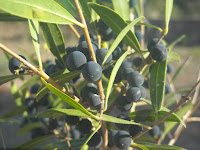
We’ve learned a lot about the proud Sardinians, about the sordid history of Isola di San Pietro, the slavery and the savagery and the Mafioso influences, about the quaint original Baraka structures, and the ancient Nuranghes scattered around the area (ancient stone structures build by Sardinian Fred Flintstones nearly 3000 years ago). We’ve developed local tastes for tuna pizza, cheap Sardinian white wine, and Mirto, a digestif made from tiny blackish-blue myrtle berries that grow freely in this area.
We’ve had the luxury and time to immerse ourselves in Mediterranean island life, to explore a unique town and a beautiful island, to relax and read and swim and cook.
We’ve begun to dream in Italian regularly…
And of course, like most real experiences in life, we’ve had our share of challenges.
Like the jellyfish stings and sunburns, visits to the dottore (doctor), the parking tickets, cheese codes, and the frustrations with our limited language skills.
Or there was that time when we accidentally burned that table and thought we’d paid a reasonable amount of money for the damage, but then were confronted in the piazza months later by the grandmother who convinced us that the damages were so severe that we needed to pay several HUNDRED more Euro.
Or that time we all got Swimmer’s Ear and thought it was just a bad ear infection, but then the pain got so intense that Jenna and I had to go to the hospital (which, by the way, cost only 36 Euro for two emergency visits).
Or that fateful day when Jeff jumped from the cliff into the ocean and lost his WEDDING ring. And how we snorkeled and searched for days and days and never found it.
Or that time we almost capsized the little boat we rented.
Or that time I was driving down that narrow street and clipped a parked van, managing to scrape the entire length of both vehicles. And the trouble we had filling out the accident report I found in the glove compartment, because the form was written in French (we have a French car, leased in France). And how I had to call France, and they had to find both an English and Italian interpreter.
Or that time Jeff was washing Terry’s sailboat and accidentally dropped an important piece of the boat into the water (the hatch cover) and it sank to the bottom, and how we couldn’t find it, and we had to rent a scuba diver to retrieve it.
But the challenges and “bad” times are all part of the package, an integral piece of the patchwork of experiences that make this time in Italy not an idyllic holiday resort vacation, but real life adventure. At least this is what Jeff keeps reminding me.
We are finally off to caretake a villa in Le Marche, a new region where we will undoubtedly stumble and blunder and manage to pull it off somehow.
NEXT UP: Le Marche
Like the jellyfish stings and sunburns, visits to the dottore (doctor), the parking tickets, cheese codes, and the frustrations with our limited language skills.
Or there was that time when we accidentally burned that table and thought we’d paid a reasonable amount of money for the damage, but then were confronted in the piazza months later by the grandmother who convinced us that the damages were so severe that we needed to pay several HUNDRED more Euro.
Or that time we all got Swimmer’s Ear and thought it was just a bad ear infection, but then the pain got so intense that Jenna and I had to go to the hospital (which, by the way, cost only 36 Euro for two emergency visits).
Or that fateful day when Jeff jumped from the cliff into the ocean and lost his WEDDING ring. And how we snorkeled and searched for days and days and never found it.
Or that time we almost capsized the little boat we rented.
Or that time I was driving down that narrow street and clipped a parked van, managing to scrape the entire length of both vehicles. And the trouble we had filling out the accident report I found in the glove compartment, because the form was written in French (we have a French car, leased in France). And how I had to call France, and they had to find both an English and Italian interpreter.
Or that time Jeff was washing Terry’s sailboat and accidentally dropped an important piece of the boat into the water (the hatch cover) and it sank to the bottom, and how we couldn’t find it, and we had to rent a scuba diver to retrieve it.
But the challenges and “bad” times are all part of the package, an integral piece of the patchwork of experiences that make this time in Italy not an idyllic holiday resort vacation, but real life adventure. At least this is what Jeff keeps reminding me.
We are finally off to caretake a villa in Le Marche, a new region where we will undoubtedly stumble and blunder and manage to pull it off somehow.
NEXT UP: Le Marche
Saturday, September 25, 2010
Harvest
-Henry David Thoreau
The heat of summer has mellowed into early fall. The morning sun no longer assaults as it rises, the dew sits on the patio a little longer each day and the breeze actually has a cooling effect. The days warm to a point of pleasure instead of pain and the ocean feels colder during our afternoon swims. The long summer evenings are gone--we still eat dinner al fresco, but we eat sooner, and we need sweaters and a bright candle to enjoy our food.
The other day, our landlord Rafaella invited us over to join their annual harvest of uva (grapes). Needless to say, we were excited to have something to do for a change.
Rafaella and her husband Salvatore live at the northern edge of town, while “nonno” and “nonna” Rosso (the grandparents) live on the adjacent property. The Rossos have lived in Carloforte since the village was formed—they are original Carlofortini, descendents of the original 200 settlers given land to harvest.
Both families have several acres of land--Rafaella’s is primarily devoted to their 3 horses and a large vegetable garden. The quintessential Italian mother, she’s always sending us home with delicious bounty from her garden: zucchini, potatoes, tomatoes, watermelon, mint plants, and even capperi (capers) that she picks from her own plants, coats into a salt bath, and preserves in a vinegar/water mixture. I often confuse the word “capperi” (capers) with “capelli” (hair)—a mistake that Rafaella thinks is a riot.
The grandparent’s property is primarily devoted to grapevines, from which the family wine is made. Nonno makes a rough and rustic “blush” blend combing all uve on their property regardless of variety, size, color and quality.
By the time we arrived that day, the sun had burned away the cool morning clouds and the whole family was already hard at work. As usual, everyone turned out for the event. Salvatore has two sisters, both married with children, and we’ve come to know the whole gang—aunts, uncles, cousins. Over the summer, we’ve joined them for lazy afternoons at the beach, gelato in the piazza and late evening strolls on the lungomare. We’ve been invited to family dinners, and met for pizza at their favorite restaurant (La Conca, on the other side of the island.) In a sense, they’ve taken us under their warm Italian wing.
The instructions we were given for harvesting the grapes was simple: “tutte le uve”—all the grapes. Jenna and I were given clippers, while Jeff was ushered back to help out with the “crushing” of the grapes in a huge manual masher.
The vines were heavy with clusters of varying color and size that, to our untrained eyes, appeared to represent several different varieties – small, light green round grapes with a tinge of red, greenish-yellow grapes, larger dark green oval grapes and even deep blue ones. I popped a few into my mouth, and they tasted sour-sweet, warm and soft and seedy.
We expressed some concern with sorting protocol, but were reminded with a smile “tutte le uve”, all the grapes were to be cut and mixed together. With clippers in hand, we worked our way down the orderly rows, cutting the clusters and filling up the buckets. Bending, squatting, reaching, breathing in the smell of grapes and sun-baked earth, it felt so good to get hot and sweaty and tired from actually working.
Harvest is immediately satisfying work. Whether it’s a grape or a tomato, a pumpkin or peach, it’s that point in time a plant strives for, the whole point of its existence, that peak zenith moment when it so readily lets go of the thing it’s been nurturing, its creation. We cut and cut and cut, and as each bucket filled, we lugged it back to the “crushing” area. No selective process, no sorting, no de-stemming, we unceremoniously dumped the whole kit-and-caboodle into the masher and cranked away, slowly turning the mixture in the large fermenting vat.
An impressive assortment of insects buzzed around the top of the vat, drawn to the smell of the fruity broth.
It was no-nonsense wine making, taken down to the basic elements: cut grapes, squish grapes, save juice. Tomorrow, the mixture would be pressed to separate juice from skins and stems.
Without filtration, yeast or sulfates, the juice was bound for barrel sometime next week where it would remain until approximately next November when it would be “bottled” into reused (and pretty clean) gallon jugs. Certainly, the ancient art of winemaking can get much more complicated, but nonno Rosso’s technique was about as simple as it gets.
The kids helped by taking turns at the crank wheel, but soon became bored with the effort of work and darted inside the cool house to sit on the floor and dress up Barbies (girls) or hang Barbies by their necks (boys). Much teasing and taunting was had by both.
After a few hours, we’d picked all the grapes, and I imagined I could hear the vines breathe a collective sigh of relief, basking in a job well done, their mission complete, purpose fulfilled, time now to finally rest and relax.
Afterward, we all sat around the long dining table for a hearty midday meal, feasting on pesto lasagna, marinated vegetables, stuffed tiny peppers and wine (the product of last year’s harvest). After the meal was finished and the dishes were taken away, I was so tired my eyes could barely stay open.
I was grateful when, minutes later, Rafaella walked over to me and said, “Now, we sleep” and I nodded in agreement and said, “Si, anche noi” (yes, us too).
For the first time in months, we actually had a REASON for an afternoon siesta, and it was good.
NEXT UP: Arrivederci Carloforte
Saturday, September 18, 2010
Transitions
“The interval between the decay of the old and the formation and the establishment of the new, constitutes a period of transition which must always necessarily be one of uncertainty, confusion, error, and wild and fierce fanaticism”
-John C. Calhoun
Basically, our reason for coming to Italy was, “Why not?” The timing seemed right.
Our goals were a little vague—but intentionally so. We hoped to find a place to live, a lovely hilltown close to the sea, an affordable place that felt right to us. On previous trips to Italy, we’d flitted from town to town as “stranieri” (tourists). This time we wanted to put down some roots, stay long enough in one place in order to live more as locals and less as tourists-- to develop relationships and experience the rhythm of a local Italian life. We hoped to find work, but that prospect was a little more complicated, because in order to work legally in Italy we needed specific “documenti” (i.e., a visa) from the U.S., which we didn’t have. Mostly we were hoping, in this initial 6-month period (May to November), to figure out how to live here more permanently—maybe next year, maybe several years from now.
It took us about a month of hard searching to find “our place”, this island (Isola di San Pietro), this town of Carloforte. And when we found it, we knew it was special. A little slice of paradise.
Living here is indeed magical. A vital village teeming with locals of all ages, in a beautiful setting of azure waters, white sand beaches and hidden coves, baked in sunshine every day. What more could we want?
But as each lovely day flows into the next, and the next, and the next, time begins to slow. Days and weeks merge, and we find ourselves lulled into something like a walking sleep, groggy, lethargic, unable to remember what day it is, staring for long periods of time at nothing in particular. We are saturated in wonder--so what’s wrong?
When we first got to the island, there were always new places to explore, new experiences to occupy our time. But this is a small island, and we’ve had a lot of time. Jeff has ridden his bicycle up and down the island so many times he’s practically worn a groove in each of the three roads. Even working up the energy to go to the beach has become tedious. We’ve found so many hard-to-find “eyes of St. Lucia” we can fill a coffee cup.
I stopped having adventures to write about because we keep doing the same things over and over again.
It’s funny how quickly we get “used” to things, even really beautiful good things. Whether it’s a lovely ocean, a beautiful beach, a nice home, a good marriage, it’s hard to keep a fresh perspective. All those things in life that start out new and beautiful and exciting—they might still be there, but as the newness fades, the familiarity seeps in and we stop seeing the beauty. It takes so much work to keep seeing things new, to keep a fresh outlook. It’s hard to keep appreciating things.
Appreciation is easier when we compare something with its opposite. Eckhart Tolle says if everything in the world were blue, we wouldn’t even see blue anymore, because there wouldn’t be anything to compare it to. So we appreciate the sun when it’s balanced with rain. We appreciate the summer when it’s balanced with winter. We appreciate ease when it’s balanced with stress.
Rest and relaxation are good, but without anything to compare it to (like work) there comes a point when relaxation turns a corner and becomes flat and lifeless, and not even very restful. Some days, the most taxing thing I do all day is write up a grocery list. Or take a shower. On days when we have an actual thing to do, like someone invites us over to dinner, we’re almost giddy with excitement. It’s pathetic.
Feeling restless, we’ve branched out a bit, hopped the ferry and explored mainland Sardinia, taken day-trips to Cagliari, driven up to Alghero a few times. We’ve come to appreciate mainland Sardinia’s unique, remote, stark beauty.
But we needed something more.
What was this new and unfamiliar feeling?
Malaise?
Meloncholia?
Boredom?
By nature, Jeff and I are vibrant-minded people who never have a problem with occupying our time. We’re hard workers but we know how to relax and enjoy life. We share an appreciation for the Zen of “what is”, but also a quest for adventure.
We have found ourselves in a situation we hadn’t anticipated: neither tourist nor resident, we’re in this “in between” place. If we were tourists, on vacation, we’d just relax and explore, move on if things got boring. If we were residents, our lives would inevitably be structured around work, around accomplishing something.
Here we were, in ITALY, a country of endless beauty, feeling relaxed, yet restless and caged. Trapped. Bound by our remote location, but also by our limited budget, a budget so tight we haven’t set foot in a Carloforte restaurant other than to order a pizza
We began to fantasize about adventure, hopping a ferry to Sicily, hitting the open road. But not only did we have an agreement with our landlords for 2-1/2 more months of ridiculously low rent, but also we knew from experience that road travel is expensive and exhausting. Living out of a suitcase, eating in restaurants every meal, staying in hotels—we couldn’t afford it. Our situation here was good and sustainable, inexpensive and safe. Hitting the road was so enticing, though--maybe we’d find more towns like Carloforte. But maybe not. It was a serious gamble.
The road was calling to us. We longed for adventure, for newness, for something to happen.
We gnashed over our situation.
And then as luck (or destiny) would have it…something happened.
Ever since our travels began, we’ve been on a few email lists, alerting us to potential caretaker/housesitter positions. Usually, they’re either in locations we’re not interested in (like South Dakota) or jobs we’re not interested in (like cleaning) or qualified for (like horse experts), but one day I found a house-sitting opportunity in Le Marche region east of Rome. Assignment: take care of 2 dogs while the owners go on vacation to Croatia. Dogs! Le Marche! We jumped on it immediately, sent them our resume/profile, references, and spent the entire day, alternately checking email and crossing our fingers, chanting, “Please pick us, please pick us”. By the end of the day, we’d connected with the owners, they loved our profile, it seemed like the perfect fit, and the deal was done.
We were wild with excitement, dizzy with the prospect of a new adventure. A whole new region to explore! Something to write about! It’s the perfect opportunity to relocate and still save money. We leave in just a few short weeks.
The next day we talked to our landlords and gently explained the situation, and they were wonderfully understanding, mostly just sad we were leaving. (Rafaella even cried).
It feels strange to be this excited about leaving a place we were so excited to find, but life is strange sometimes.
NEXT UP: Harvest
Subscribe to:
Posts (Atom)